
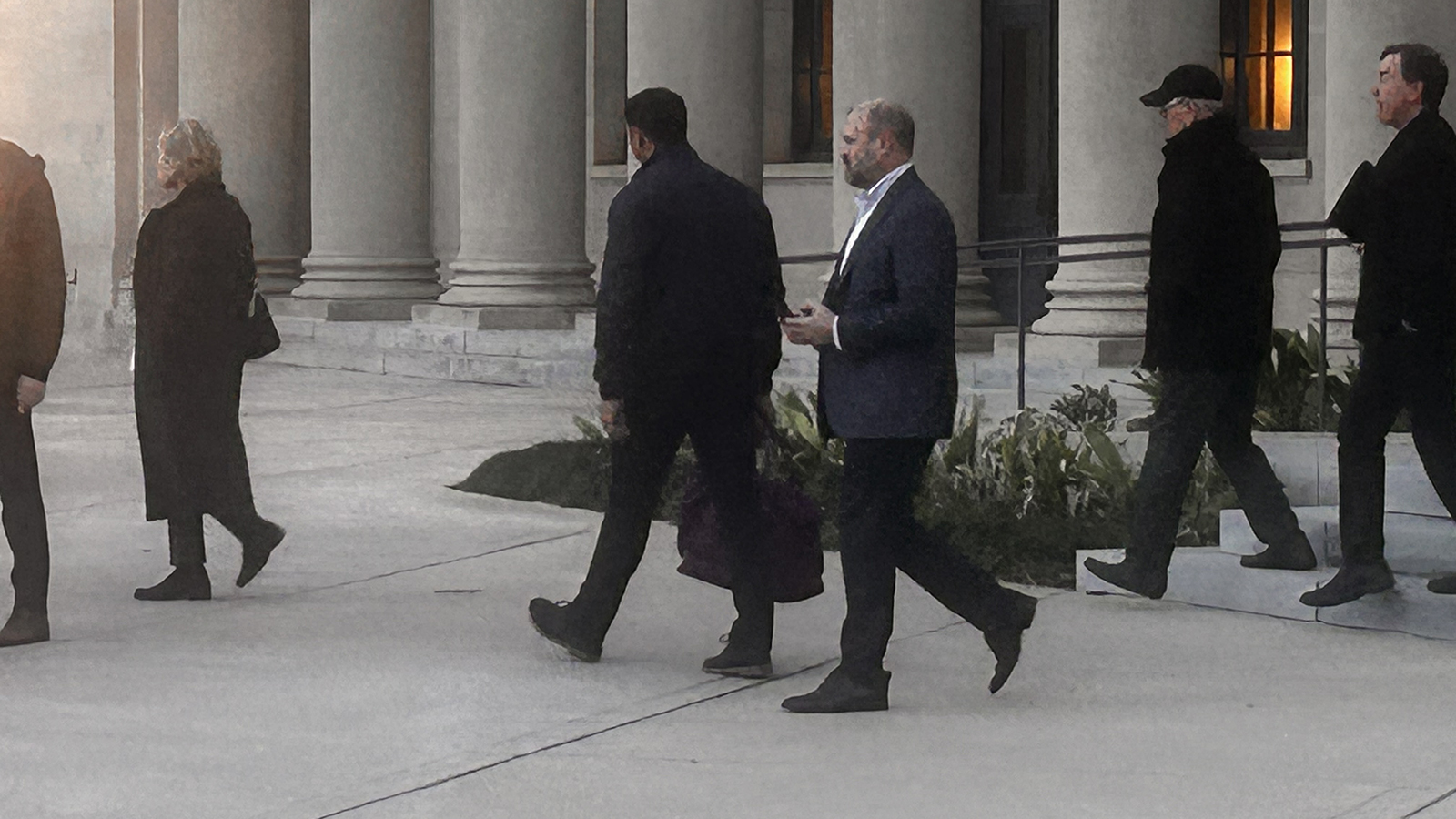
If there was any question as to whether Judge Kenneth Bell would allow the legal teams for NASCAR or the duo of 23XI Racing and Front Row Motorsports to have free rein within his courtroom, that question was answered at the end of Day 3 of the ongoing antitrust trial between the sanctioning body and the two race teams.
Related: Live Updates from NASCAR, 23XI, FRM Antitrust Lawsuit
Judge Bell concluded that NASCAR’s team had violated two court orders throughout the day’s proceedings, one during each of the witnesses on the stand on Wednesday.
The first violation came during Scott Prime’s testimony as the NASCAR legal team revealed a quote from Spire Motorsports team owner Jeff Dickerson, which had been previously agreed upon as an item that would be redacted from the trial, as Dickerson is not a witness in the trial.
Later, during the testimony of Bob Jenkins, team owner of Front Row Motorsports, NASCAR’s legal team began revealing pieces of the financials for Jenkins’ other businesses outside of the scope of NASCAR, which was another item that was agreed to be off limits ahead of the trial.
Bell warned both sides that any further transgressions in the courtroom would lead to severe punishments. It was a stark reminder that there are rules in Court, much like there are rules at the racetrack. And if you don’t follow them, you’re subject to the ruling of the person running the show. In this case, it’s Judge Bell.
NASCAR Recovers Scott Prime Testimony, But Ends On Rocky Note
As NASCAR had its chance to question Prime, who was grilled heavily by Jeffrey Kessler on Tuesday and again on Wednesday morning, the sanctioning body’s legal team did a great job softening a lot of the situations that Prime had worked his way into during the line of questioning from Kessler.
NASCAR was able to reaffirm that the Charter System was a creation of the Race Team Alliance, not NASCAR. And according to Prime, the race teams got everything they wanted with the original 2016 Charter Agreement.
According to Prime, the teams didn’t request to increase the 25% share of the media rights money with the 2016 Charter Agreement, which was the same amount that the teams received prior to the Charter System being installed.
Prime said that NASCAR proposed a spending cap with the latest Charter Agreement, but he said many of the top teams in the sport weren’t interested in a spending cap, which led to NASCAR not pursuing the idea.
Despite his testimony under duress from Kessler painting a picture that NASCAR didn’t really give many concessions to the teams during the 2025 Charter negotiations, which spanned from 2022 to 2024, he walked those thoughts back when being questioned by the NASCAR legal team and said that he felt, in the end, NASCAR chose to go down path 2, which was meeting the teams in the middle.
Prime explained that while the Team Negotiating Committee was originally in charge of communicating for the entirety of the Chartered teams initially in the negotiations, he found through conversations with the owners of Spire Motorsports and Trackhouse Racing that the things being pitched by the TNC didn’t necessarily reflect what all of the teams wanted.
Prime received an email from Spire and Trackhouse, which outlined what they were looking for, which Prime said was the first real look into what any team actually really wanted during the process, and the teams had ideas of how to enact what they’d like to see.
NASCAR’s legal team also asked Prime to clarify the “exclusivity” clause in the Charter Agreement for when a team sells its Charter. Contrary to his original testimony to the same question from Kessler, Prime said teams could do whatever they wanted the day after they no longer had a Charter, including starting their own stock car racing series.
When he answered the same question from Kessler, Prime said there was a 12-month non-compete if a team owner were to sell their Charter, and that it extended to any party in the ownership group that had a 10% ownership stake or higher.
As for the “take it or leave it” deadline that the teams allege was given to them at 5 PM ET on September 6, 2024, Prime said it was simply a deadline that needed to be put in place to get the deal done. He said NASCAR planned to never pick a date and force teams to sign it.
Prime also concluded that he felt Jim France doesn’t make decisions to enrich himself, and that NASCAR negotiated the 2025 Charter Agreement in good faith.
As NASCAR concluded its questioning of Prime, Kessler asked for a redirect examination.
As Kessler retook the stage, he immediately dove into Prime’s assertion that Jim France doesn’t make decisions to enrich himself.
“Do you know how big his house is?” Kessler asked. “I don’t know,” Prime responded.
“Do you know how many times he flies commercial?” Kessler followed up. “I don’t,” Prime said.
Kessler then said that France doesn’t fly commercial. He has only flown on the NASCAR plane since taking over as CEO of NASCAR. He questioned why Prime would even confidently offer that assumption to the jury if he didn’t know those two key points about France’s life.
Kessler then dug into the claim from Prime that Jim France and NASCAR’s board chose to go down “Path 2” (meeting the teams in the middle) instead of “Path 1” (enriching NASCAR at the expense of the teams and the future growth of the sport).
“He said no bueno to evergreen (permanent) Charters,” Kessler said before reminding Prime about the anger he, Steve O’Donnell, and Steve Phelps expressed in a text conversation after a frustrating meeting where France and the board refused to meet teams in the middle.
“How is that path 2?” Kessler asked.
Prime reiterated that NASCAR chose path 2.
Kessler then brought up the “Gold Codes,” which was NASCAR’s fallback plan to own the teams and hire the drivers themselves. Prime insisted in his testimony with NASCAR that “Gold Codes” was only created as a way to be ready in case the teams chose to walk away from their Charters during the contentious Charter negotiations, but he confirmed to Kessler that he had worked on “Gold Codes” in different presentations spanning back to 2022, which was before the letter from the teams informing NASCAR they would be looking at all of their options after NASCAR refused to meet their demands.
Kessler then questioned Prime’s testimony, where he stated that after a December 2023 draft of the Charter Agreement was sent to the teams, there was hardly any negative feedback, and it appeared they had made a lot of progress.
Kessler asked, “Are you aware that some teams considered it criminal?” To which Prime responded, “I said there were different points of view.”
Kessler read from an email between the team owners, which came directly after a meeting Prime had with Steve Newmark, the then-president of RFK Racing.
Team owners said things ranging from “This is the most one-sided document I’ve ever seen” to “Criminal.”
When Kessler asked Prime if any team owner had told him any different, he could only muster Jeff Dickerson’s name. When asked if he had heard positive things from any other team owner, Prime said he didn’t really speak to many team owners.
Possibly the biggest oh-no moment for Prime during the redirect questioning was when Kessler called into question Prime’s testimony that the team owners didn’t request an increase to their portion of the broadcast rights revenue when negotiating the 2016 Charter Agreement.
Prime responded to Kessler, saying that since he joined NASCAR in 2015, the team owners didn’t request an increase to the broadcast revenue during that initial charter negotiation.
Kessler recalled an email from the RTA in November 2015, where the teams say they are giving up on increasing the broadcast revenue because they tried, but NASCAR was unwilling to budge.
Kessler then asked if Prime was sticking to his testimony, to which Prime said, “I never said they were happy, I said they didn’t ask for a change.”
Kessler reminded him that he testified to the fact that the teams never asked, when clearly they did. Kessler then asked Prime if he knew what NASCAR said to the teams when they denied the revenue increase. Prime indicated he didn’t, and that it may have been because he was still new with the company and may not have been looped in on it.
Kessler scoffed, “Why did you testify like you knew?”
“That’s fair,” Prime responded.
Bob Jenkins, Dale Earnhardt’s Biggest Fan, Takes the Stand
After Scott Prime was dismissed from the stand, Bob Jenkins, Front Row Motorsports team owner, was called to the stand by the 23XI/Front Row legal team. And as expected, he had an easy and smooth opening portion of his time on the hot seat.
Jenkins revealed he was one of the founding members of the Dale Earnhardt Fan Club and that he first became an Earnhardt fan during the 1979 season. Jenkins told a story about how he and a friend, who was a Darrell Waltrip fan, would travel the Southeast attending races when they were younger. He called it some of the best times of his life.
When he got married, Jenkins says he told his wife that he wanted to become a NASCAR team owner someday, to which she quipped, “We don’t even own our own car.”
Jenkins then told the story of how he rose from a part-time race team owner to becoming a Daytona 500-winning team owner.
Then, Jenkins opened up about the “take it or leave it” charter negotiation offer from NASCAR on September 6. The team owner says he was at dinner with his family and didn’t have good cell reception, but when he got home, he saw that his phone was blowing up.
He saw that NASCAR sent the offer at 5 PM ET, and initially told teams to sign it by 6 PM ET, but then extended the deadline to Midnight.
“Honestly, it hurt,” Jenkins said.
Jenkins said that with the offer coming in that late on a Friday afternoon, there was no chance to have any lawyer look over the document. Jenkins said ultimately, NASCAR did offer a lengthier extension to sign the Charter, which he says he appreciated, but he thinks NASCAR knew there would be recourse had they not done so.
Jenkins reiterated that this isn’t an attack on the France family, as he feels they have done a lot of really good things. However, he says the 2025 Charter Agreement, “isn’t one of them.”
The comfort that Jenkins experienced taking questions from his own legal team was short-lived as he would endure an intense cross-examination from NASCAR’s legal team.
NASCAR’s attorney Lawrence Buterman questioned if Jenkins tries to maximize his revenue with his race team, to which Jenkins responded that he does so for all of his businesses.
Because Jenkins mentioned his other businesses, Buterman saw this as an opportunity to bring up that Jenkins puts companies owned by himself or his children as primary sponsors on Front Row Motorsports cars periodically throughout the season for free.
To which Jenkins agreed that he does do that, but only when a sponsor can’t be found for that particular race. He’d rather run one of his business logos rather than a sponsorless race car.
Buterman then revealed a provision in a few of the contracts offered by Front Row Motorsports over the years, which offer a chance to pay for sponsorship or services in a donation to Lakeway Christian School, which is owned by Jenkins.
The attorney also questioned how Bob Jenkins can justify not only not paying some drivers, who pilot cars for his organization, but charging some drivers millions of dollars to do so, while drivers like Denny Hamlin earn $14 million per year to drive.
To which Jenkins quipped, “If they win as much as [Hamlin] does, they will.”
This elicited a thumbs-up from Hamlin, who was watching from within the courtroom.
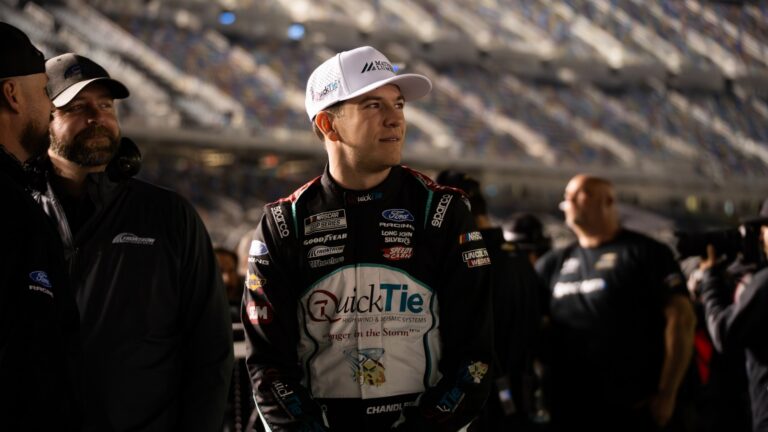
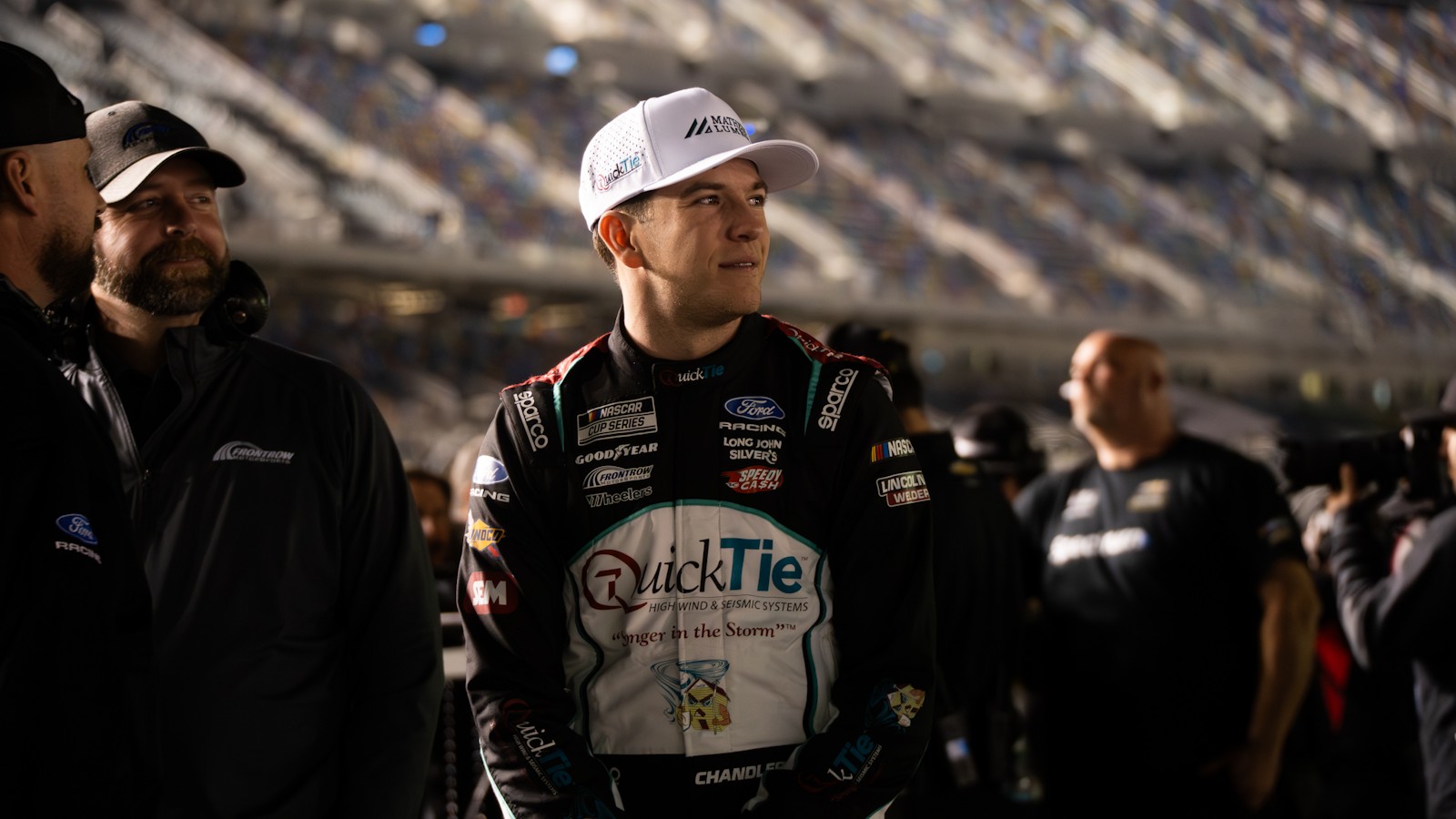
Jenkins emphasized that he doesn’t force anyone to pay him to drive, the ones that do choose to do so. He mentioned that having Chandler Smith, a championship-caliber driver behind the wheel of his trucks, who is also paying him $1.5-million, is a pretty good business decision.
Buterman, as he did with Hamlin, questioned how Front Row Motorsports could pay its drivers just 8.5% of its revenue, and put restrictions in their driving contracts, is any different than what they allege NASCAR is doing that is “anticompetitive.” Predictably, Jenkins fired back with the same answer that they aren’t a monopoly.
When Buterman asked how the Charter Agreement, which has led to stability for race teams, who don’t have to worry about qualifying for races anymore and an increase in revenue, could be a bad thing, Jenkins responded by saying that he feels Buterman is conflating his point of view.
Jenkins, one of the original Charter team owners in 2016, says he feels the Charter System is great, but he doesn’t like the Charter Agreements that have been in place since 2016. He signed the original agreement because he felt it was a step in the right direction, but he couldn’t justify signing the 2025 edition.
Another interesting note is that Buterman revealed another connection between 23XI Racing and Front Row Motorsports besides being tied together in this legal battle. In 2021, Hamlin and Jenkins discussed merging their race teams in emails. Under the proposal, Michael Jordan would take 50% ownership of the team, Hamlin would take 30%, and Jenkins would be a 20% owner.
23XI Racing would purchase two charters from Front Row for $8 million apiece in the proposed deal, but it never came to fruition.
The day came to a close with Jenkins still on the stand, and he will have to endure further grilling in the morning from Buterman, but after the stern warning from Judge Bell on Wednesday afternoon, you have to wonder if there will be less wind in Buterman’s sails.
And with how contentious some of the questioning has been on both sides, you have to wonder how it’s playing with the jury, who will ultimately be the ones who decide who wins this trial.


One Response
The ever overbearing NASCAR Cosa Nostra must be stopped.
Period.