
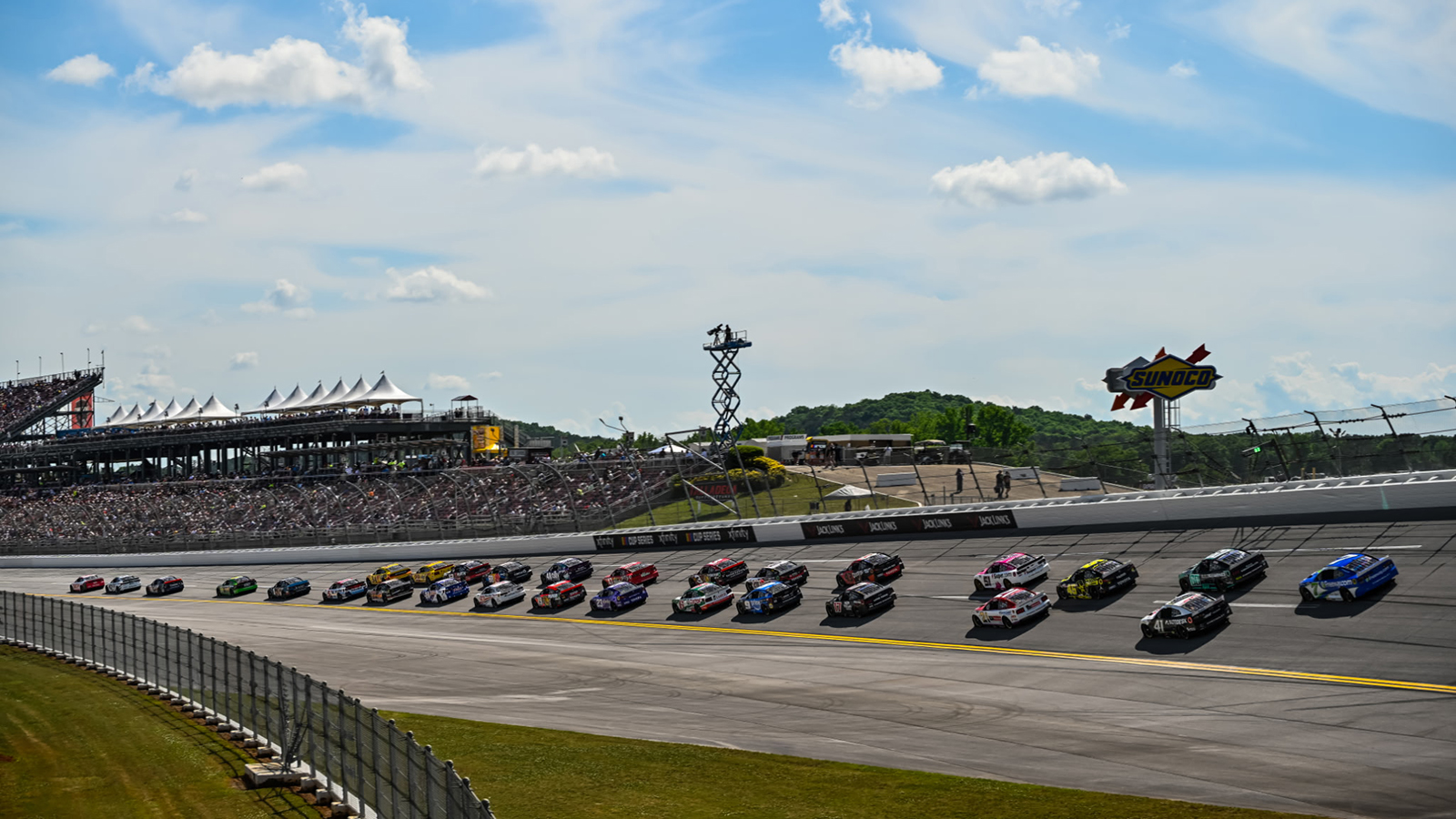
In an attempt to stave off the necessity for fuel savings in the closing portions of last Sunday’s Jack Link’s 500 at Talladega Superspeedway, NASCAR adjusted the Stage Lengths for the 188-lap race. With the adjustments, the opening Stage of the race featured 98 laps, or more than half of the race’s overall distance.
NASCAR figured that by making it so teams would not be forced to pit road for fuel pit stops during Stages 2 and 3, it would allow drivers to more aggressively mix it up for position once the opening Stage of the race was finished.
It was a solid thought, but Denny Hamlin, who competed in the event, didn’t have a glowing review of the impact to the overall superspeedway racing product that the Stage Length changes made this past weekend.
“No. It did not work,” Hamlin said of the changes to the Talladega race on the latest episode of his Actions Detrimental Podcast. “But they tried, and I hope next time they try something different.”
Debate continues: Are these cars right for superspeedway racing? ? pic.twitter.com/CNjdb4JyvG
— Dirty Mo Media (@DirtyMoMedia) April 28, 2026
Not only were the opening 98 laps of the race a complete snoozefest, as drivers saved fuel for the entirety of the Stage, but once drivers were allowed to go all-out, they once again got locked side-by-side in two lanes, and nobody was able to generate enough of a run to form a third lane, which would have allowed actual movement in the running order.
This became super obvious in the closing laps, as Carson Hocevar, the race’s eventual winner, and Chris Buescher remained tied at the hip at the front of the field for the final three laps of the race, no matter how hard they were shoved from behind.
Hocevar only gained an advantage on the final lap when Buescher’s car got squirrely after a hard push from Ricky Stenhouse Jr. off of Turn 4.
Hamlin says the problem with the superspeedway package in the NASCAR Cup Series isn’t the fuel-saving strategy that teams have employed heavily since the 2022 season. Instead, he says it’s all about the car. Hamlin says if the car were capable of generating runs, drivers and teams wouldn’t be so laser-focused on saving fuel to gain track position.
If Hamlin were allowed to make changes, he would slice off the drag that the Next Gen car produces at superspeedway tracks.
“My first recommendation is, please cut the spoiler off this car,” Hamlin pleaded. “If we’ve gotta run 210 [miles-per-hour], we’ll run 210. It’s fine. Please get some drag out of this car. It has hundreds of counts more than our Gen 6 car [did]. If you let us pull out of line, and know that we can come out of our pit stop in 10th, and still have a chance to win because we can pull out of line, and make runs, we won’t care about the fuel savings.”
While Hamlin concedes that higher speeds will result in more liftoff, which would in turn lead to more cars getting airborne, he says at the end of the day, something has to be done to the car to improve the product at superspeedway races, which used to be the most anticipated races of the NASCAR Cup Series season.
“Cars go slower today [at the superspeedways] and have more horsepower. It’s just the way these cars are designed. This car is not designed to be superspeedway racing,” Hamlin emphasized.
So, what can NASCAR realistically do to improve the product at superspeedway races going forward? That will be one of the biggest tasks on the desk of Steve O’Donnell, who was named NASCAR’s new CEO this past weekend at Talladega Superspeedway. But one thing is for sure: the Stage length adjustment Band-Aid failed, so it’s time for bigger, perhaps, bolder ideas.
With the Daytona 500 serving as NASCAR’s “Super Bowl”, the sanctioning body cannot continue to kick the can down the road on this issue.